It couldn’t exist without the original, the family history my auntie completed eight years ago.
She didn’t want that book, which she’d spent years researching, put out into the world.
On the title page of the manuscript she sent me, she’d written: Not for publication: for private circulation only, among the grandchildren of James Reilly and Mary Ann O’Hare Reilly.
She thought what it revealed would hurt some people in our extended family who didn’t know the truth yet. At least she didn’t want them to hear it from her.
But she wanted this story to come to light in some form. She wouldn’t have sent me her book otherwise. She wanted me to remix it.
‘Your Dad and I thought it would be interesting to see what your creative mind might make of it,’ she wrote when she sent the book. ‘There are so many questions still unanswered.’
I think auntie had the idea I could turn it into a novel. But it’s not fiction, and I felt it would be wrong somehow to treat it so. The material was asking me to do something else.
Still, I don’t know if I feel totally comfortable labelling this as non-fiction either. Although I’m writing about real people who actually lived, or are still living, and using their real names, the characters I have created to stand in for them cannot ever truly represent them. Facts found in the historical record, no matter how detailed, can only ever be a flimsy model of a real life, in all its complexity and vastness. And so much has to be invented.
What I’m saying is, I have to tread carefully, so as not to step on any graves.
I don’t state this to be meta or tricksy or clever. Rather, as a reminder to myself and also to you, dear reader. It’s all too easy to forget, when writing or reading, that the words on the page are not the truth, only a perspective. We can easily get swept up in a story, and the suspension of disbelief applies as much to non-fiction as to fiction. Or whatever you would call this that I’m doing.
Every point of view is a caging of reality. Every narrative, a violence. Even an attempt to create beauty is by necessity destructive. So much is distorted, or guessed at, or discarded on the cutting room floor.
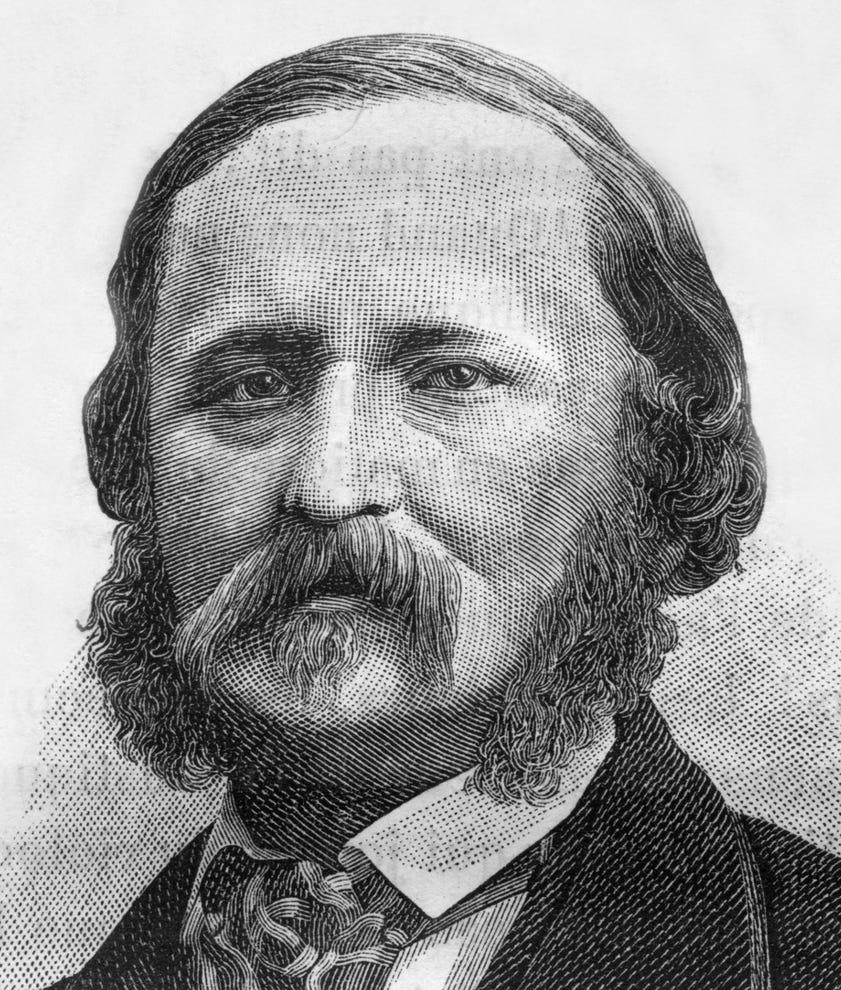
So let’s call this a remix. An attempt to bring back to life a chorus of voices, which had almost faded to silence. I think here of the earliest recorded human voice, a snippet of the French folk song ‘Au Clair de la Lune’, sung by Édouard-Léon Scott de Martinville on April 9, 1860, using his phonautograph device. In those days, nobody had any idea yet that one day you would be able to play sound recordings back. The phonautograph was a device that drew a sound wave onto a sheet of paper, like an autograph of the sound—or in this case, an autograph of the voice. The intention was that people would be able to look at these sound signatures, and study them, as we study seismographs of earthquakes.
The phonautograph had a large drum for collecting the sound—imagine Monsieur Scott de Martinville sticking his head in the drum, and taking a deep breath as he prepared to sing. The sound of his voice was collected in the drum and caused a membrane to vibrate, much like the membranes in the human ear. In turn, this moved a stylus pen, which scored the shape of the sound waves on a sheet of paper, covered in the soot of an oil lamp. The soot ensured that the sound signature scratched on the paper was more visible, and preserved.
Édouard-Léon Scott de Martinville
But Scott de Martinville’s song was almost lost, never heard until 2008, when audio historian Dr Patrick Feaster discovered his recording in an audio archive in Paris. Feaster and his team recreated the sound, and made it available for playback. You can listen to it online if you search for ‘oldest known recording of a human voice’. It is eerie, beautiful and subterranean. Like hearing a ghost singing in a catacomb. Or the strained cry of a banshee in a folk tale of long ago.
Reading auntie’s manuscript for the first time was for me like listening to ghosts singing from the catacombs. Before this, I’d never really given much thought to the lives of my direct ancestors, beyond my parents. I had not even the wisp of an image of them. The figures who lived in my mind to represent the generation of my grandparents and great-grandparents were fictional composites. Pieced together from characters in short stories by Seán Ó Faoláin and Frank O’Connor, James Joyce, Michael McLaverty and William Trevor. This all-male slant vision never really conveyed me to my people. It had conjured an alien and artificial literary simulation of the generations before. I didn’t have to think about my actual ancestors, because these characters stood in for them, taught to me in school or chosen as proxies of the imagined past by a scholarly establishment.
Folk songs and history lessons and Hollywood movies about our revolutionary heroes, emancipators and martyrs stirred in me the spirit of the Irish nation, but demoted my actual family to bystanders, faces indistinguishable in the sepia crowd.
Most of us have to make do with understanding our past in this way; most past lives recalled are those of the great men, whose great deeds were recorded. Or lives that never were, fabricated by great authors. Most of humanity are onlookers in history. Our cultural memory has been siphoned into a narrow vial. So it is quite a rare gift my auntie gave me. Her research breathed life into voices silenced by their supposed insignificance. How could I refuse such a gift?
At last I saw my ancestors sharpen into focus, mouths forming around voices, and faces following. Eyes like mine gazed at me. Coming from somewhere else, off unremarkable fields, ragged still, as if made of the evening mist, down country lanes my people trudged in procession. The more I read of their story, the nearer drew the dead, the more solid they became. And in their features, the precursors of my own face.
Every sentence I write here seems a ululation, a summons to them.
With each word, I feel closer to my great-grandfather, the betrayer, an ordinary man who inflicted great pain, and to my grandmother, one of his victims.
So I can’t help but wonder now what gets passed down, or how it all reflects on us, the living descendants.
Sweet Inheritance is a reader-supported publication. To receive new posts and support my work, consider becoming a free or paid subscriber.
Ancestral reckoning is a common theme in world folklore and mythology; many of the old stories speak to ancient anxieties about fate, family, and moral inheritance. Because in many ancient cultures, fate was seen as inescapable. The idea you might be doomed by your bloodline, or by decisions made generations ago, must have really terrified earlier humans.
Oedipus Rex is the classic example: even as he flees his predicted fate, Oedipus unknowingly fulfils it. His downfall suggests personal agency may be an illusion—you can’t outrun your origins.
These anxieties live on today—just replace ‘fate’ with ‘genetics’, ‘trauma’, or ‘social class’. Our terror about fate is often expressed in the therapist’s office, as a murmured dread: ‘Am I just like my parents? Can I ever change and get better?’
If my great-grandfather was a kidnapper, which in fact mine was, what does it potentially say about me?
If we could choose our ancestors, we probably wouldn’t choose villains. Who wouldn’t wish for a noble and proud family tree, rather than one twisted by shame? In our ignorance of our origins, perhaps we like to imagine our forebears were all fair and wise.
Though it’s likely many of us have killers, for example, somewhere in our ancestry, if you go back far enough. The sheer number of your ancestors and the necessity of killing for survival throughout history mean it’s more probable than not. Go back twenty generations (roughly 500 years), and you’re talking over a million people in your family tree. Statistically, some of them will have done morally questionable things—including killing. Whether in war or otherwise.
There’s also, to reiterate a theme, the ancestral karma we inherit, if you believe in that sort of thing. How do you reconcile yourself with the bad deeds of your predecessors? Or with pain handed down? How do you change the lineage?
Often in stories, myths and legends, the hero discovers villainy in the family, or discovers they’re secretly related to their sworn enemy. It happens in Dune, Game of Thrones, Star Wars. In the Irish mythological cycle, Lugh, an immortal warrior king, must kill his grandfather Balor, a demonic tyrannical one-eyed giant, in a decisive battle. By doing so, he changes the fate of his entire lineage and ushers in a new age. Not that I have delusions of grandeur to seat myself alongside the mythological heroes, but I do believe retelling a lost story has strange power.
In my family the sins and betrayals are relatively recent, and we have them all documented in detail due to my auntie’s thorough historical research.
To state auntie’s qualms again: some of us in our family know what really happened. Maybe we have an obligation to protect our other family members, however distant, who don’t know from what they don’t know. An obligation of silence. Or maybe we have an obligation to put this story out there.
I believe we honour the memory of the dead by telling their stories, but it is not our place to answer the questions their lives raised. Who are we to fill in the gaps? The best we can do is bring more voices back to life, and let those voices raise the questions again that drove their lives. Every human life is a striving to answer the questions and great mysteries that torment and soothe us in equal part. Every human being only wants to go home and find peace.
So if you find the approach of this book at times to be non-linear, or fragmented, or caged in doubt, know this is intentional. It is my attempt, however, futile, to soften the violence of narrative, and not to make villains of my dead relatives, who were only imperfect creatures, as we all are. Let us resist chronology. Let us resist causality. Let us resist the neat bows and ribbons of narrative.
But first let us return to a beginning. Not the beginning, since no such thing ever exists. In 1906, in Queens, New York, a girl was born to emigrant parents who hadn’t found the new life they’d hoped for in America. The girl was named Anne - but everyone called her Annie. Over eighty years later, when I knew her, on the other side of the Atlantic, in the waning days of her life, she was still called Annie. To me, she was Grannie Annie, and the rhyming of her name was pleasing to a child’s ear.
The historical records from New York City show Annie’s father, James, worked for a time in a leather factory, but he fell into unemployment. Recall his wife Mary’s letter to the US Consul in November 1912: he became delicate, she wrote, in a handwriting like that scratched by the stylus pen of a phonautograph.
(Story continues after the paywall below. Upgrade to continue reading.)
Continue reading this post for free, courtesy of Patrick Loughran.